
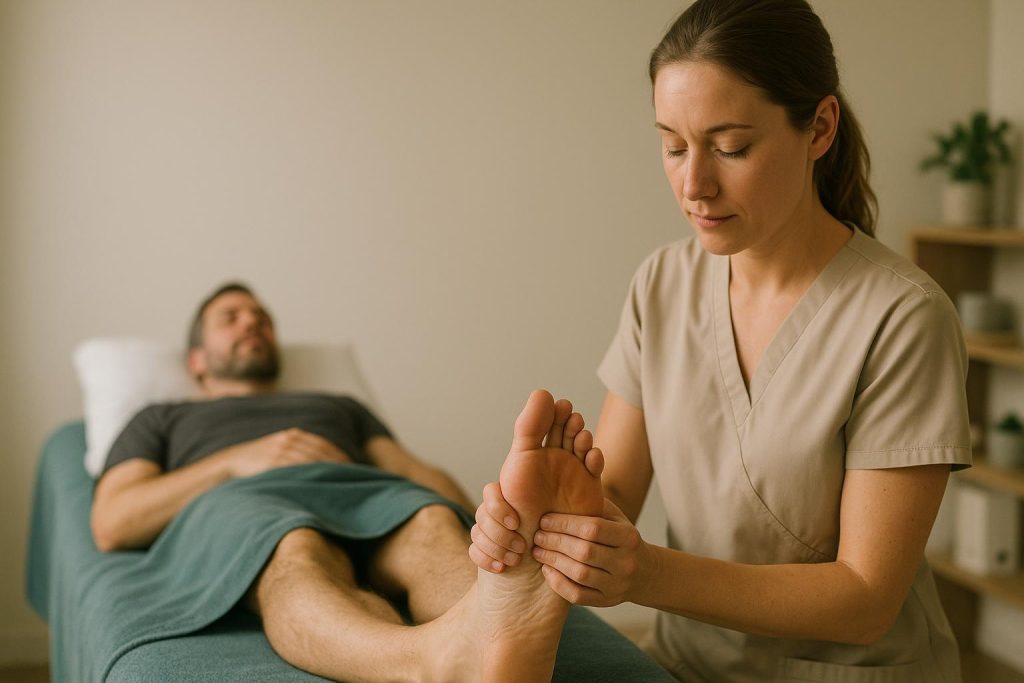
What Mild Soreness During a Plantar Fasciitis Massage Can Mean
Yes, it can be normal to feel temporary, mild discomfort during a massage for plantar fasciitis, especially when the bottom of the foot, arch, heel, calf, or ankle has been tight and sensitive for some time. Plantar fasciitis involves irritation of the plantar fascia, the strong band of connective tissue that supports the arch and runs from the heel toward the toes. When this tissue and the muscles around it are under repeated strain, even helpful touch can feel tender at first.
That said, massage for plantar fasciitis should not be something you simply endure. Effective therapeutic massage is not about forcing through sharp pain or using the deepest pressure possible. A skilled massage therapist works within your comfort level, watches how your body responds, and adjusts the approach as needed. The goal is to support easier movement, reduce surrounding tension, and help you feel more comfortable over time—not to leave your foot more irritated.
If you have been wondering, “Why does plantar fasciitis massage hurt?” the answer is often that the affected area is already sensitive before treatment begins. Focused work may briefly bring that sensitivity to your attention. The key difference is the quality and duration of the sensation. Mild, manageable tenderness that settles shortly after pressure is released can be expected. Severe, sharp, burning, electric, or worsening pain is not a sign to push harder.
Why plantar fasciitis can feel tender during massage
Plantar fasciitis pain is not always limited to one small spot at the heel. The plantar fascia works with the muscles, tendons, joints, and nerves of the foot and lower leg. Calf tightness, limited ankle movement, long hours on your feet, changes in training, unsupportive footwear, or a sudden increase in activity can all add stress to the area. For this reason, a well-planned plantar fasciitis massage may include more than direct pressure on the painful part of the sole.
Your therapist may use gentle techniques on the foot and arch, then assess and treat related areas such as the calves, Achilles region, shin muscles, ankles, hamstrings, hips, or lower back when appropriate. Working on these connected tissues can be useful because a tight calf, for example, may affect how the ankle moves and how much load reaches the plantar fascia when you walk.
When a restricted or overworked area receives pressure, you may notice a dull ache, tenderness, stretching sensation, or “good hurt.” This feeling should be tolerable and should ease when the pressure is reduced. It is also common for one side of the body to be more sensitive than the other. Your symptoms, activity level, sleep, stress, and the stage of your condition can all change how massage feels on a given day.
Comfortable therapeutic pressure versus pain that needs attention
Clear communication makes massage therapy safer and more useful. A good rule is that you should be able to breathe normally, relax your muscles, and speak openly while the therapist works. If you start holding your breath, tensing your leg, pulling your foot away, or feeling anxious about the next stroke, the pressure may be too intense or the technique may need to change.
Usually acceptable sensations may include:
- Mild to moderate tenderness in a tight area
- A dull, brief ache that decreases as the pressure is adjusted
- A feeling of release or warmth after the therapist moves on
- Light soreness later that day or the next day
- A temporary awareness of tissues that have been stiff or overworked
Tell your therapist right away if you feel:
- Sharp, stabbing, pinching, or tearing pain
- Burning, tingling, numbness, or an electric sensation
- Pain that travels strongly into the toes, calf, or elsewhere
- Pressure that makes you brace, flinch, or hold your breath
- Symptoms that become steadily worse during the session
- Any sensation that feels alarming, unfamiliar, or simply too intense
Speaking up is not being difficult. It gives your therapist the information needed to tailor your care. They may lighten the pressure, work around the area, shorten the time spent on the sole of the foot, use slower techniques, or focus first on the calf and ankle. Pain-focused care should always be collaborative. You remain in control of your session.
Is soreness after a plantar fasciitis massage normal?
Some people feel mild soreness after a therapeutic massage, particularly after their first appointment or after work on long-standing tightness. This post-massage soreness often feels similar to the mild ache you might notice after unfamiliar activity. It should generally improve within 24 to 48 hours rather than intensify each day. As treatment is paced well and the tissues become less reactive, many people find that later sessions feel more comfortable.
More soreness does not mean a better treatment. Deep work can be helpful for some people, but intensity must match the state of the tissue and your individual tolerance. For persistent tightness in the calves and lower legs, deep tissue massage may be one option when it is applied thoughtfully. It should never be treated as a test of toughness. The right amount of pressure is enough to address tension without creating a pain flare.
After your session, give your foot a chance to settle. Simple aftercare can include:
- Taking a short, easy walk if it feels comfortable, rather than jumping into a hard workout
- Drinking water and eating normally to support your usual recovery routine
- Using gentle ankle circles, calf stretches, or foot mobility only if they do not increase pain
- Wearing supportive shoes or slippers rather than going barefoot on hard floors
- Using a cold or warm compress based on what feels soothing for you and does not aggravate symptoms
- Reducing high-impact activity for a day if the foot is unusually sensitive
Avoid aggressive stretching, hard rolling, or repeatedly digging into a sore heel right after a massage. More force is not always more helpful. A consistent, manageable plan is generally easier for the body to tolerate than occasional intense treatment followed by a flare-up.
When to pause massage and seek medical assessment
Massage can be a supportive part of a broader plan for foot pain, but it is not a substitute for medical assessment when symptoms suggest something more serious. Plantar fasciitis can resemble other conditions, and a proper evaluation is important if pain is severe, sudden, or not improving.
Consider speaking with a physician, physiotherapist, podiatrist, or other qualified health professional before or alongside massage if you have:
- A sudden pop, bruising, major swelling, or inability to bear weight
- Redness, heat, fever, or signs of infection
- Persistent numbness, weakness, or loss of sensation
- Open wounds, a recent fracture, or a suspected stress injury
- Diabetes, circulation concerns, inflammatory conditions, or reduced sensation in the feet
- Severe heel pain after an injury or pain that wakes you at night
- Symptoms that continue to worsen despite rest and modified activity
It is also wise to tell your massage therapist about recent injuries, medications, health conditions, changes in activity, and any diagnosis you have received. This helps them choose techniques that fit your situation and know when referral is the best next step.
How a personalized approach can support foot comfort
There is no single massage technique that is right for every person with plantar fasciitis. Some people benefit most from calming, gentle work that helps them tolerate movement again. Others need focused attention on calf and foot restrictions, with pressure introduced gradually. A therapist may also discuss practical factors that affect your daily load, such as standing at work, running volume, recovery days, footwear, or returning to exercise after time off.
At Bounce Right Back Massage, treatment is adjusted to your symptoms, goals, and response in the moment. If your foot is highly sensitive, it may be more useful to begin with broader work through the lower leg and use less direct pressure on the plantar fascia. For stubborn movement restrictions, RAPID NeuroFascial Reset may be discussed as another targeted option. The right approach is the one that feels purposeful, respectful, and manageable for your body.
Massage often works best when paired with the basics recommended by your health-care provider: activity modification, gradual strengthening, mobility work, supportive footwear, and realistic recovery time. Improvement may be gradual, particularly when heel pain has been present for months. Paying attention to small changes—such as less pain with the first steps in the morning, greater walking tolerance, or reduced calf tightness—can provide a more useful picture than expecting every session to remove symptoms immediately.
What to say during your appointment
You do not need special language to communicate your needs. Simple feedback is enough: “That is tender but okay,” “Please use less pressure there,” “I feel pain shooting into my toes,” or “Can we work around that spot for now?” You can also ask what the therapist is working on and why. Understanding the plan can make care feel less intimidating and help you make informed choices about your recovery.
In short, mild and short-lived discomfort during a plantar fasciitis massage can be normal, but severe pain is not required for progress. A supportive session should leave you feeling listened to, with a clear plan for what to do next. If heel or arch pain is getting in the way of work, exercise, or daily walking, book a pain-focused massage and let your therapist know exactly what you are feeling. Together, you can find a level of care that supports relief while respecting your limits.
