
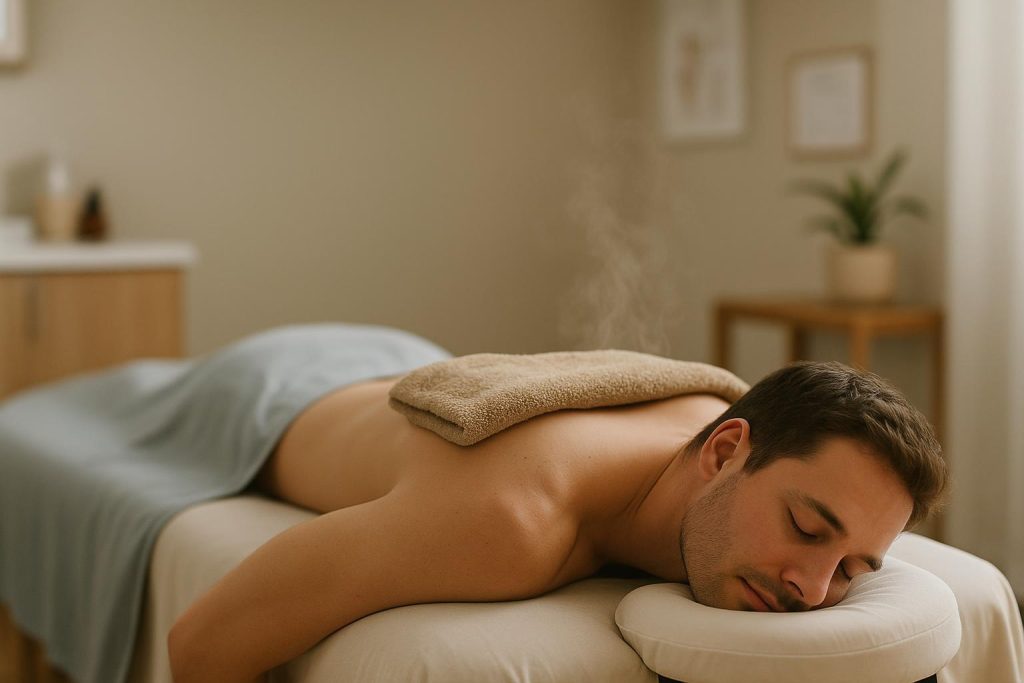
Preparing Your Muscles With Gentle Heat
For many people, a warm shower or warm compress before a back massage can be a simple, comfortable way to prepare for treatment. Gentle heat may help tight muscles feel less guarded, support circulation in the area, and make it easier to settle into your appointment. It is not required, though. A skilled massage therapist can work with you whether you arrive warm from a shower, straight from work, or feeling stiff after a long day.
The best choice is the one that feels safe and helpful for your body. If mild warmth helps your shoulders drop, your lower back loosen, or your mind slow down, it may be a useful part of your pre-massage routine. If heat makes you feel dizzy, overly tired, inflamed, or uncomfortable, skip it and let your therapist know how you are feeling. Massage therapy should be personalized, not a test of how much preparation you can do beforehand.
Why heat can feel good before a back massage
Muscle tightness is not always just about the muscle itself. Stress, repetitive movements, poor sleep, exercise, desk work, injury, and nervous system overload can all make the back, neck, hips, and shoulders feel tense. A warm shower or compress can create a calming signal for the body. As the area warms, you may notice that it feels easier to move, breathe deeply, and relax.
Heat can be especially pleasant when you are dealing with ongoing stiffness rather than a fresh injury. People often find it helpful for common concerns such as:
- Upper-back and shoulder tension from computer work or driving
- Neck stiffness and tension that travels into the shoulders
- A tight lower back after standing, lifting, or sitting for long periods
- General muscle soreness after activity
- Stress-related muscle guarding or difficulty relaxing before treatment
- Chronic feelings of tightness that improve with warmth and gentle movement
It is important to keep expectations realistic. Heat does not fix the underlying cause of every type of pain, and it is not necessary to make massage “work.” Instead, think of it as one supportive tool. It may help you arrive feeling more comfortable and receptive to a therapeutic back massage.
Hot shower or warm compress: which is better?
Both options can be useful, and neither is automatically better. A shower provides broad, moist warmth that can feel soothing across the back, shoulders, and hips. A warm compress is more targeted, which can be useful if one small area feels tight, such as the upper trapezius muscles near the neck or one side of the lower back.
A warm shower may be a good choice if:
- You feel generally stiff or cold throughout your body.
- You want a quiet few minutes to unwind before leaving for your appointment.
- You have tension in several areas, such as your neck, back, and hips.
- You prefer moist heat and find it easier to relax under warm water.
A warm compress may be a good choice if:
- You want to focus on a small, specific area of muscle tightness.
- You do not have time for a shower.
- You are at work or away from home before your session.
- You want a simple option that does not leave you feeling overheated.
A warm towel, microwavable heat pack used as directed, or heating pad on a low setting can all work. Never place intense heat directly on bare skin, and avoid falling asleep with a heating pad on. A layer of clothing or a towel between the heat source and skin helps reduce the risk of burns or irritation.
How long should you use heat before massage?
Short and gentle is usually enough. For most people, about 10 to 15 minutes of comfortable warmth is plenty before a massage appointment. A warm shower does not need to be very long, and the water does not need to be extremely hot. The goal is to feel relaxed and comfortable, not flushed, sweaty, or drained.
Use a moderate temperature. If your skin turns very red, feels prickly, becomes numb, or you start to feel lightheaded, the heat is too intense or has been used for too long. Step away from the heat, cool down gradually, drink water, and take a few minutes to rest before driving to your appointment.
A very hot shower right before leaving can sometimes make people feel sleepy or dehydrated, especially in colder weather or if they have not eaten or had enough fluids. If you tend to feel faint in hot showers, choose a warm compress instead, shorten the time, or skip heat altogether.
When to avoid heat before a massage
Heat is generally more appropriate for long-standing tightness and stiffness than for a new, hot, or swollen injury. If you recently strained your back, fell, were in a collision, or have sudden pain that is getting worse, a hot shower or heating pad may not be the right first step. In the early stage of an injury, warmth can sometimes increase swelling or throbbing.
Consider avoiding heat, or checking with an appropriate health professional first, if you have:
- A fresh injury with noticeable swelling, bruising, warmth, or inflammation
- New severe back pain after a fall, accident, or impact
- Reduced sensation, numbness, or difficulty sensing temperature in the area
- Open wounds, a skin rash, sunburn, or an active skin infection
- Fever, illness, or unexplained body aches
- Circulation concerns or a condition that makes heat unsafe for you
- Unexplained pain that has not been assessed and is severe or persistent
Seek prompt medical assessment for back pain with new bowel or bladder changes, numbness in the groin area, major weakness, chest pain, shortness of breath, or pain following a serious accident. Massage and heat should not delay care for urgent symptoms.
If you are recovering from a car accident, it is especially important to follow the guidance of your healthcare team and communicate clearly with your therapist. Motor Vehicle Accident (MVA) Massage Therapy can be adapted to your stage of recovery, symptoms, and comfort level. You do not need to push through pain or aggressively heat an area in hopes of speeding up recovery.
What to do instead if heat is not right for you
If an area feels newly irritated, swollen, or sharply painful, do not assume that more heat or deeper pressure is the answer. Rest from aggravating activity, use comfortable positioning, and seek guidance when needed. Some people prefer a cool pack for a short period after a fresh strain, while others simply feel best with no temperature therapy at all.
Gentle movement can also be a useful alternative before massage. Try an easy walk, slow shoulder rolls, relaxed breathing, or light range-of-motion movements that do not increase pain. Avoid intense stretching, heavy exercise, percussion devices, or aggressive self-massage right before your session. These can leave tissues irritated and make it harder to tell your therapist what was already bothering you.
How to get the most from your massage appointment
Your massage therapist will get better information from you than from any pre-treatment routine. At the start of your appointment, share where you feel pain or tightness, when it began, what makes it better or worse, and whether you used heat beforehand. Mention any injuries, surgeries, medications, changes in health, or symptoms such as tingling and numbness. This helps your care stay focused and appropriate.
You can also tell your therapist what you want from the session. Maybe you want help with stress-related shoulder tension, lower-back stiffness after work, or a movement restriction that is affecting exercise. A therapeutic approach can be adjusted for your comfort, goals, and how your body responds that day.
For broad muscle tension and stress, a Relaxation Massage may be a comfortable way to calm the body and ease into care. If your main concern is persistent tightness or repetitive strain, Deep Tissue Massage may be more suitable when provided at a pressure that your body can tolerate well. Deep work should never mean holding your breath or forcing your way through sharp pain.
For stubborn pain or restricted movement, Rapid NFR Massage offers a targeted approach that focuses on how the nervous system and fascia may be contributing to discomfort. Your therapist can explain whether this approach fits your symptoms and goals. If warmth is one of the things that reliably helps you relax, a Hot Stone Massage can also offer a soothing, professionally managed heat-based experience.
A simple pre-massage routine
If heat feels good and you do not have any reason to avoid it, keep your routine simple:
- Use a warm shower or warm compress for 10 to 15 minutes.
- Choose a comfortable temperature, not extreme heat.
- Drink some water and give yourself time to cool down before leaving.
- Wear comfortable clothing that is easy to change out of.
- Arrive a few minutes early so you are not rushed.
- Tell your therapist how your back feels and what you hope to improve.
There is no need to overthink it. The most useful preparation is arriving hydrated, comfortable, and ready to communicate. If a warm shower helps you make that transition, it can be a helpful addition to your back massage routine. If it does not, you have not missed an essential step. Personalized massage therapy Edmonton clients can trust begins with listening to your body and working with a therapist who takes your concerns seriously.
Bottom line: A warm shower or compress before a back massage is optional, but gentle heat may help chronic tightness feel more manageable and make relaxation easier. Keep it moderate, avoid heat on a fresh or inflamed injury, and speak up about your symptoms. The right treatment plan is one that supports comfort, movement, and a confident return to the activities that matter to you.
